The Moroccan food served to travellers is not always the food eaten at home. In the Ouarzazate valley, the difference comes down to three things: cooking time, where the vegetables come from, and the hand that rolls the couscous. Here is where to look for the family version.
What sets the cooking of the South apart
Here, the cooking is Berber before it is Moroccan. It is slow, lightly spiced, built on barley, wheat, olive oil, vegetables from irrigated plots and saffron from Taliouine. The tagine cooks in clay over embers, the couscous is steamed twice, the bread comes out of the house wood oven. Nothing is reheated.
The dishes to look for
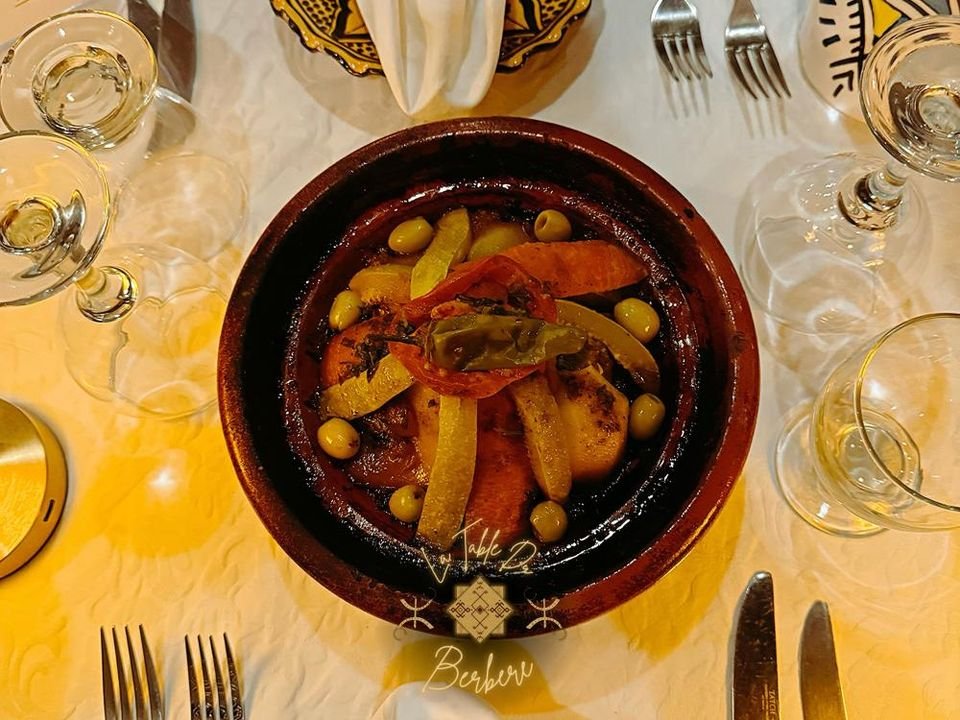
Berber tagine. Chicken with preserved lemon, beef with vegetables, kefta with egg: the emblem, served still covered, the lid lifted at the table.
Seven vegetable couscous. The dish of Fridays and family gatherings, rolled by hand and served in a painted dish.
Pastilla. Crisp pastry, almonds and cinnamon, with chicken or fish. It takes a morning of work.
Rfissa. Shredded msemen, chicken, lentils and fenugreek: the dish of births and homecomings.
Harira and the salads. To start, the evening soup and the mosaic of cooked and raw salads.
Where to find them
At La Table du Berbère, in Tifoultoute, these dishes form the backbone of the menu. Each evening chef Jasmin prepares them to order: you choose your starter, main and dessert, and the kitchen cooks only that. We write this journal, so we name ourselves first, but it is also the reason the house exists.
In the villages of the valley, guesthouses often serve a family dinner on reservation: one starter, one main, prepared for the guests of the house. If you are sleeping in a riad, ask.
In town, a few traditional restaurants offer the classic menu. Choose the long dishes, tagine or couscous, rather than grills: that is where the difference can be tasted.
The right reflex
Book, and if possible order ahead. A tagine needs more than an hour, a pastilla a morning. Kitchens that really cook need to know.
Starters and sweets have their own pages: Moroccan salads to try and Moroccan desserts to try.