The first thing on the table at a Moroccan dinner is rarely a single salad. It is a scatter of small dishes, some raw, most cooked, set down together with bread so that everyone can pick. Visitors often expect lettuce and dressing. What arrives is closer to a set of warm vegetable preparations, seasoned with cumin, paprika, garlic and good olive oil.
This is a short guide to the ones you are likely to meet around Ouarzazate, followed by what is actually on our carte, so the two are not confused.
Cooked salads you will meet in the region
These are general Moroccan dishes, found in homes, guesthouses and restaurants across the south. Not every table serves all of them.
- Zaalouk. Aubergine cooked down with tomato, garlic, cumin and paprika until soft, then finished with olive oil. Eaten warm or at room temperature, scooped with bread. The one people ask for again.
- Taktouka. Grilled green peppers and tomatoes, cooked together with garlic and spices. Smoky, a little sharp.
- Carrots with cumin. Boiled carrots in a light dressing of cumin, garlic, parsley and lemon or vinegar. Simple and very common.
- Beetroot. Cooked and diced, sometimes with a little orange blossom water or sugar, sometimes with cumin.
- Bakoula. Mallow leaves cooked like spinach with garlic, olives and preserved lemon. More of a home dish, especially in winter.
- Potatoes with cumin, lentils, courgettes: many kitchens turn whatever the garden gives into one more small plate.
Raw salads
The best known is simply called Moroccan salad: tomato, cucumber and onion, finely diced, with olive oil, sometimes olives, parsley or a little lemon. In summer it is the most refreshing thing on the table. In winter you see more cooked salads and fewer raw ones.
Oranges also turn up in salads, sliced with olive oil, olives or cinnamon, depending on the house.
How salads fit into the meal
Salads open the meal and stay on the table while you wait for the tagine or the couscous. They are not a course to finish quickly. You eat them with bread, tearing off a piece and using it to pick up a little of each, from the side of the dish nearest you.
In the evening, if the night is cold, a soup may come first or instead. Harira, the tomato, lentil and chickpea soup, is the best known; a thick vegetable soup is just as common.
What is on our carte
This journal is written by La Table du Berbère, so here is what you will actually find with us, in Tifoultoute:
- Moroccan salad: tomato, cucumber, onion, olives, olive oil.
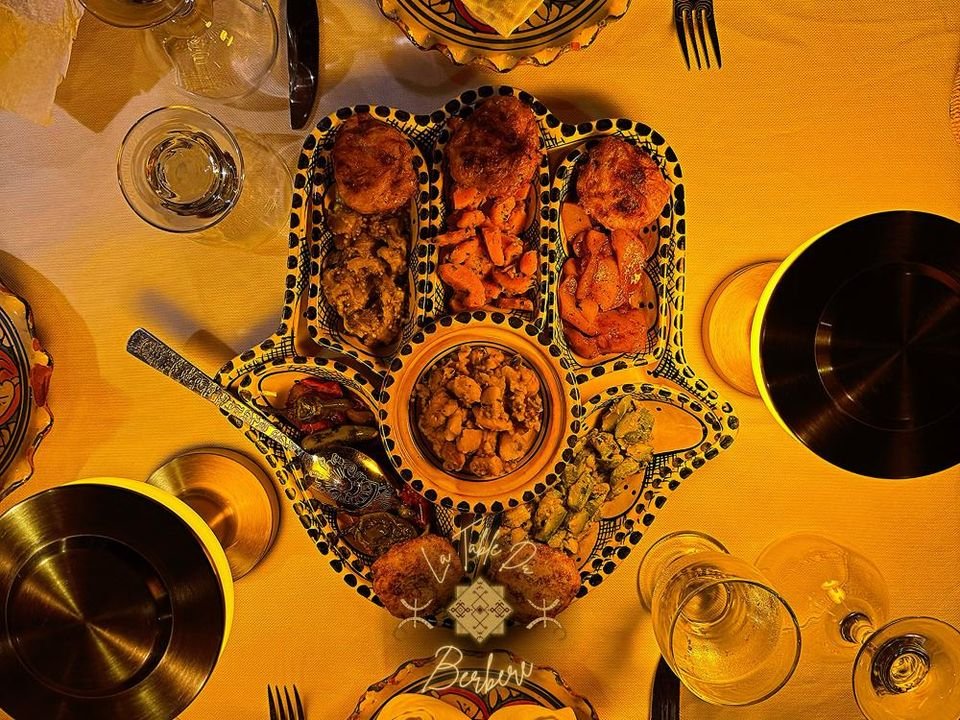
- Mosaic of Moroccan salads: several cooked and raw salads served together, to share.
What goes into the mosaic depends on the season and the garden behind the house, so we do not promise a fixed list. If there is one salad you hope to find, mention it when you book and we will tell you what is possible. Both salads sit among the starters on the carte, next to the vegetable soup, briouates and nems.
For vegetarians
Salads are the easiest part of a Moroccan meal for anyone who does not eat meat. Our general piece on eating vegetarian in Morocco lists the dishes; the practical guide for Ouarzazate covers how to ask and what to check.
Choosing a starter around your main course
If your main is a rich tagine or a couscous with meat, a Moroccan salad or a mosaic keeps the meal light. If you have chosen a vegetable tagine, consider a crisp starter instead for contrast. Our page on the best tagine in Ouarzazate has a few more pairings, and our Ouarzazate food guide explains how a full meal is usually built.