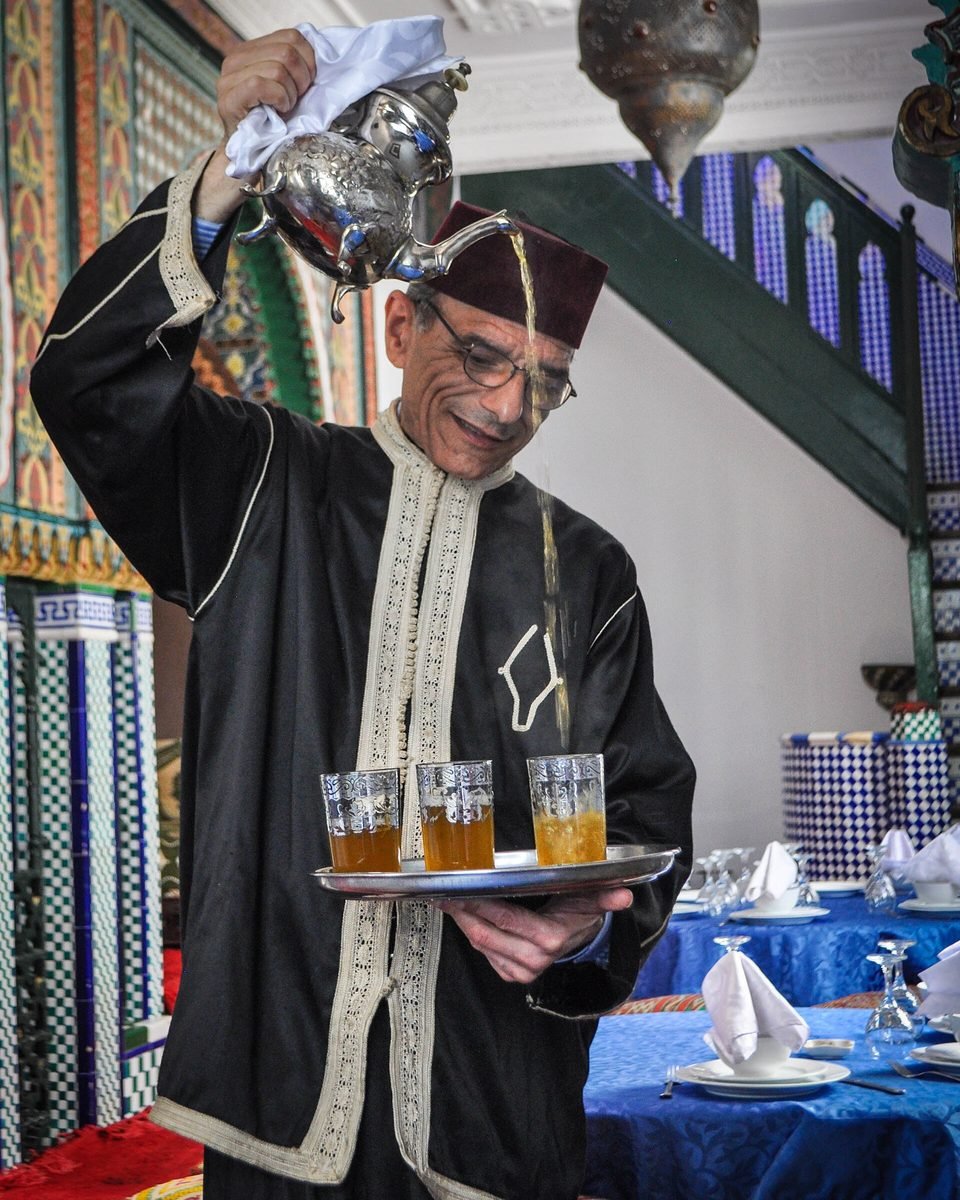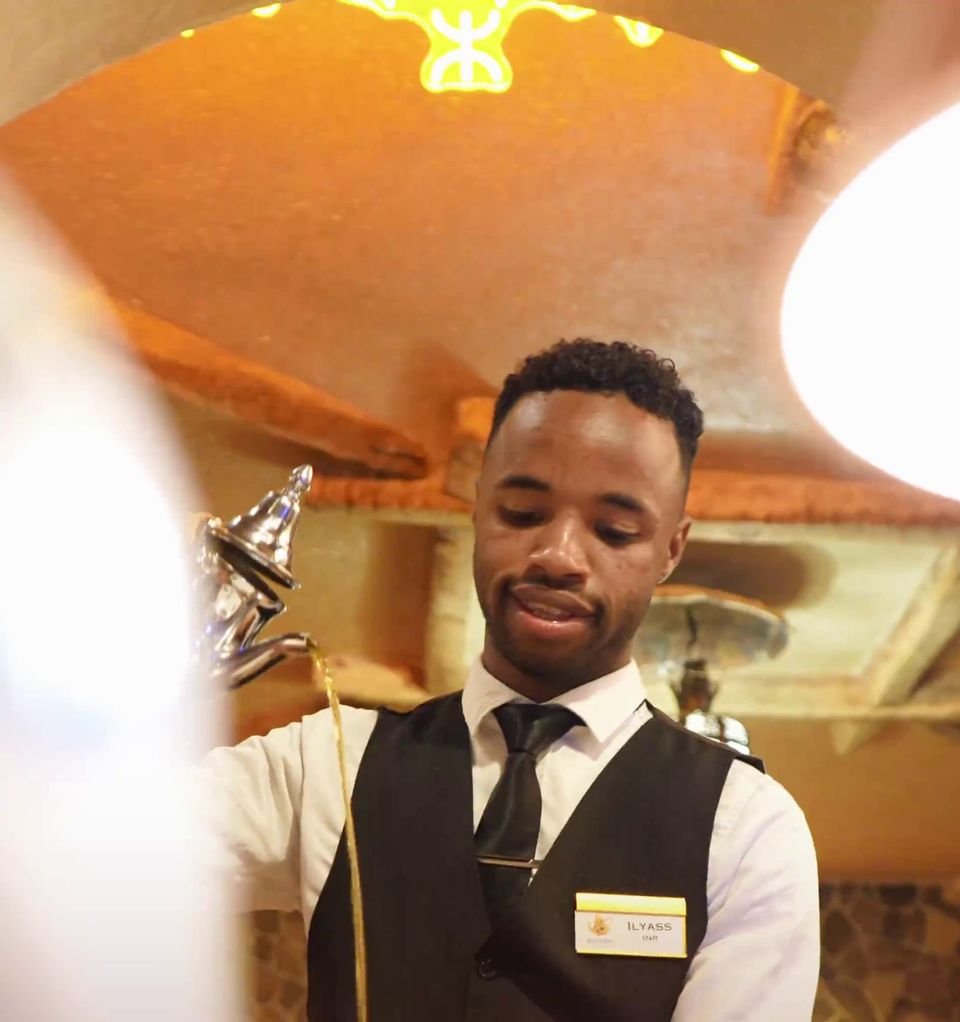
The first thing that happens is not food. Someone sets down a silver teapot and small glasses, pours from a height, and the evening starts there. If you have booked a Berber dinner somewhere around Ouarzazate expecting a show, this is the moment to adjust: the meal is the event, and it unfolds slowly.
What follows is how such an evening usually goes in the Amazigh houses of the region. Details change from one family or kitchen to another, but the shape is remarkably constant.
Tea, then water, then talk
Mint tea is the welcome. It is sweet, fresh and very hot, and the first glass is usually offered before you have taken your coat off. You are not expected to rush it. In a house, this is when people ask where you have come from and where you are going; in a restaurant, it is when the table is explained and the dishes confirmed.
Salads or soup
The starters are vegetables, and there are several of them. Cooked salads of aubergine, peppers, carrots or beetroot, a fresh salad of tomato, cucumber and onion, olives. In the cold months, a soup often replaces them. Everything comes at once, in small dishes, and everyone helps themselves. Our page on Moroccan salads goes through the usual ones.
One large dish
Then the centre of the meal, and it is generally a single dish rather than a series of courses.
- Tagine, carried in covered and opened at the table. In the south it is often chicken with vegetables or with lemon, beef with vegetables, or vegetables alone.
- Couscous, rolled by hand and steamed over the broth, with seven vegetables on top. In Berber villages it is sometimes made with barley rather than wheat.
- Rfissa, for an occasion: shredded msemen in a broth of chicken and lentils.
Bread comes with it and is used to eat. In families the dish is shared, each person eating from the part in front of them.
Fruit, sometimes something sweet
After a large dish nobody wants a heavy dessert. Oranges with cinnamon, a few dates, sometimes small almond pastries. Then tea again, and this time it can go on for a while.
The codes of hospitality
A few things that help visitors feel at ease:
- Accept the tea. At least one glass. Refusing everything can seem cold.
- Eat with the right hand if you eat from a shared dish, using bread. Cutlery is always available in a restaurant.
- Let the host serve you. The best pieces will often be pushed towards the guest. It is polite to accept and to leave a little on the plate at the end.
- Take your time. A Berber meal is not a sequence of plates to get through. Nobody will bring the bill until you ask.
What makes it "Berber" rather than simply Moroccan
The line is blurred, and honestly so: much of what the world calls Moroccan cooking comes from the Amazigh kitchens of the mountains and the south. What marks the food here is restraint with spices, slow cooking in clay, barley and olive oil, saffron from Taliouine, and vegetables from irrigated gardens. We wrote more about this in what is Berber cuisine.
Where to have one
Many guesthouses in the villages around town serve dinner to visitors on reservation, and this is where the evening comes closest to what is described above. In the centre, restaurants offer the same dishes in a more conventional setting.
We are one of those village tables, and we write this journal, so take our suggestion for what it is. La Table du Berbère is at Riad Chay in Tifoultoute, ten minutes from the centre. The evening follows this rhythm: tea, a starter, a main dish chosen from a short carte (Berber tagine, seven vegetable couscous, chicken rfissa, pastilla), dessert, more tea, in the stone dining room, on the patio or on the roof when the night is clear. You compose your menu in advance; see the carte and the evening at our table, and book for any night from 6 to 10 pm.
If tea is the part you remember most, our article on mint tea in southern Morocco explains how it is made. And for everything else about eating here, there is our Ouarzazate food guide.