In the south, tea comes before anything is said. You sit down in a guesthouse, a shop in the souk, a family home in a palm grove, and a tray appears with a teapot, small glasses and a bunch of mint. Refusing is possible. It is just rarely done.
What goes into the pot
Moroccan tea is green tea, almost always the Chinese gunpowder kind, rolled into small pellets. To it you add a generous handful of fresh spearmint and sugar, often a great deal of sugar, traditionally broken from a cone.
In winter, especially in the mountains and the pre-Saharan valleys, other herbs join or replace the mint: chiba, wormwood, slightly bitter and warming; louiza, lemon verbena; sometimes sage or thyme. If your glass tastes different in January, that is why.
How it is made
The preparation is a small ceremony, and every household has its own version. The usual steps:
- Rinse the tea. A little boiling water is poured over the leaves, swirled and thrown away. It washes the dust and softens the bitterness.
- Keep the first glass. Often the first infusion is poured into a glass and set aside: the strongest part, returned to the pot later.
- Add the mint and sugar, then the boiling water, and let it brew on the heat or beside it.
- Pour and return. The host pours a glass, looks at it, tastes it, and pours it back into the pot, several times. This mixes the sugar and the tea and lets the host judge the strength.
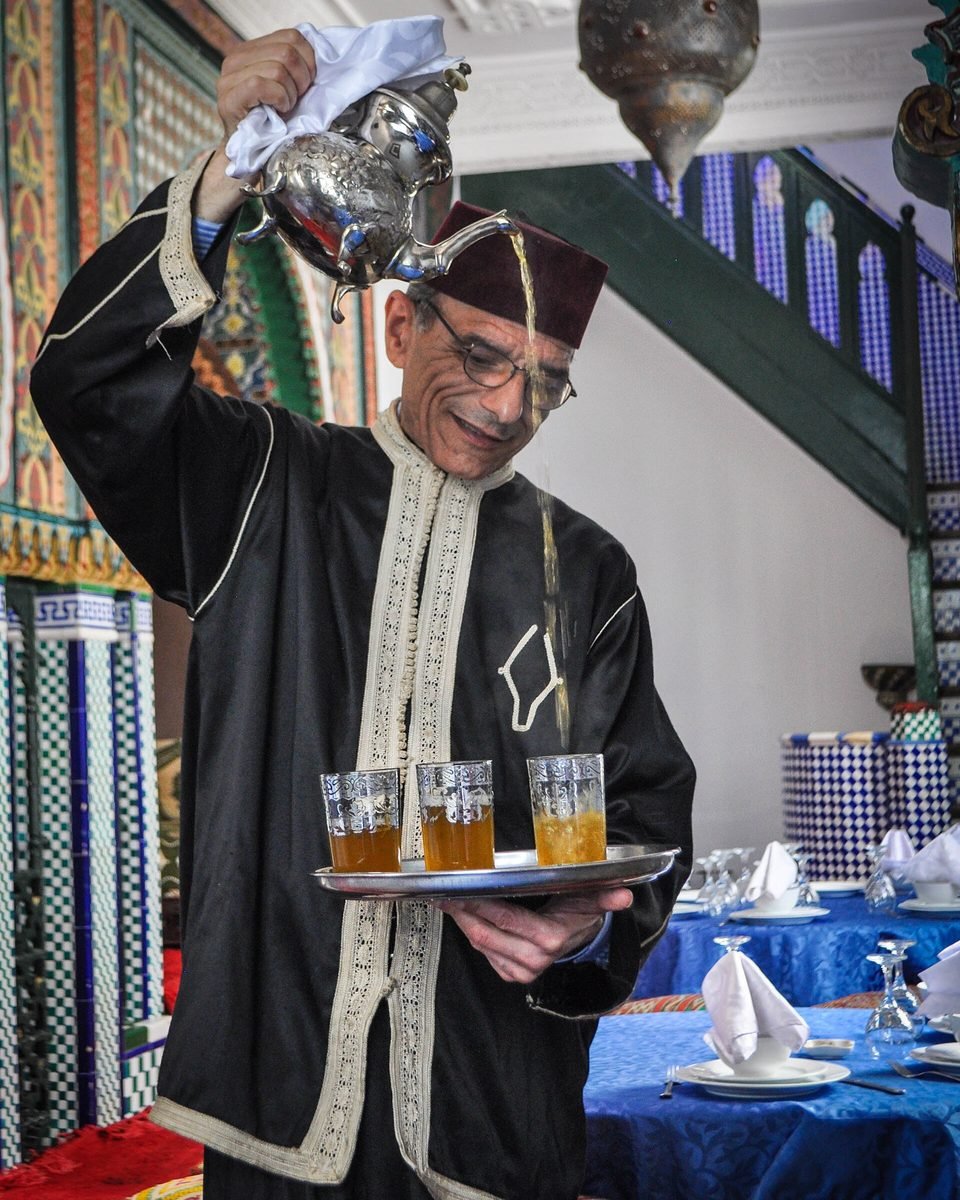
- Pour from high. Finally the tea is poured from as high as the arm allows, so that it arrives in the glass with a crown of foam. A tea without foam is considered badly served.
Three glasses
You will hear a saying, in several versions, that the first glass is gentle like life, the second strong like love, the third bitter like death. It is a saying rather than a rule, but it explains why tea is usually served in several rounds, and why leaving after the first glass can seem hurried.
Being a good guest
- Accept the glass with your right hand, and wait a moment: it is very hot, and the glass has no handle. Hold it by the rim and the base.
- If you prefer less sugar, say so before it is made, not after. A host will gladly make a pot with less.
- Slurping a little is not rude. It cools the tea.
- You do not have to drink every round, but leaving a full glass untouched says more than you might intend.
Out in the desert, among nomadic families, tea is made over embers and can last an hour. In a town café it may take two minutes. The gestures are the same.
Tea at our table
This journal is written by La Table du Berbère, at Riad Chay in Tifoultoute. With us, mint tea comes with every menu, along with mineral water, and is brought in a silver pot. When guests ask how a dinner here begins and ends, the honest answer is: with tea. Our page on what a Berber dinner looks like follows the whole evening, and the experience page shows the table.
The rooftop of Riad Chay is open every day from 8 am to 10 pm, and tea at sunset there, facing the kasbah of Tifoultoute, is the best moment of a day in the valley. Our guide to rooftop dining in Ouarzazate explains when to go up.
Where tea fits into a meal
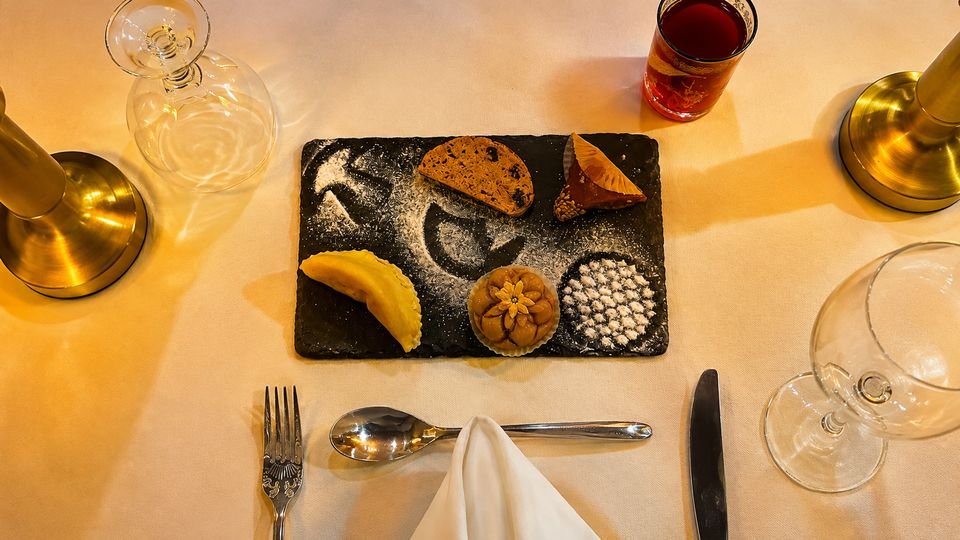
Tea is drunk after dinner, with sweets in the afternoon, at breakfast, and at almost any meeting in between. If you are wondering what to eat with it, our article on Moroccan desserts separates the sweets of the region from those on our carte. For meal times, bread and the rest, see the Ouarzazate food guide.
Cover photo: mint tea served in Tangier (photographed in Tangier, not in Ouarzazate), by katiebordner, CC BY 2.0, via Wikimedia Commons, resized.