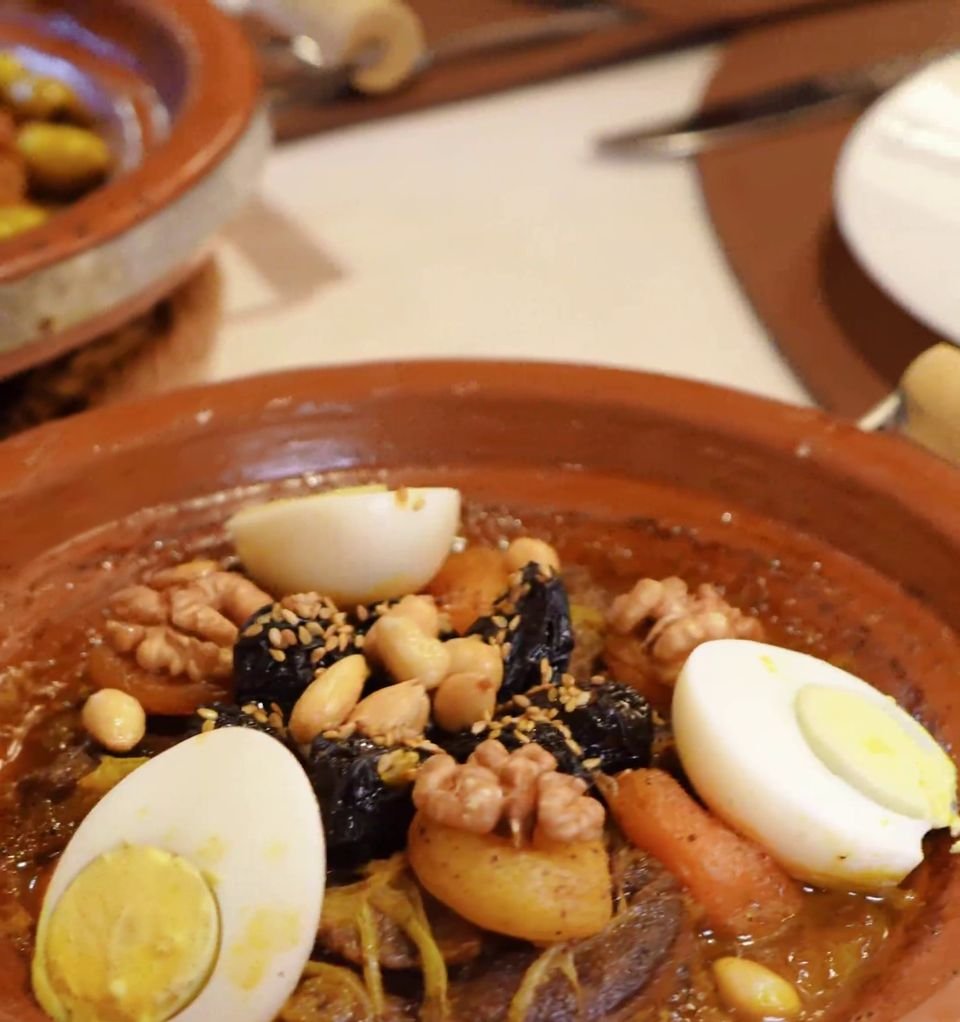
Couscous is the dish travellers most often say they want to try in Morocco, and the one they most often eat badly. The reason is simple: proper couscous takes time, and a restaurant that has not been warned rarely has that time.
Why it is the Friday dish, how the grain is rolled and what the seven vegetables mean is all in Friday couscous. Here we deal with the practical side: finding a good one in Ouarzazate, any day of the week.
Friday, and the other six days
In family homes, couscous is cooked on Friday after the midday prayer. If you are invited into a house that day, accept. In restaurants, couscous is available every day, but not at every hour, and not always at its best.
A good couscous is steamed two or three times over its broth, with the grain fluffed between each pass. Count well over an hour, longer with meat. That is why kitchens that take couscous seriously ask you to order it in advance, often in the morning or when you book. If you decide at 9 pm that you want couscous, choose a tagine instead.
How to recognise a good one
- The grain is light and separate. It should not stick together or sit heavy in the stomach. Hand rolled grain is finer than the industrial kind.
- The broth comes on the side. You moisten the couscous yourself, a ladle at a time.
- The vegetables are cut large and arranged around the dome, soft but not falling apart.
- It is served in one dish to share. Couscous is not an individual plate in most homes; even in a restaurant, it feels better from a common dish in the middle.
In the villages around Ouarzazate you may also meet couscous made with barley, darker and nuttier, the older grain of Berber cooking. It is more common in homes than in restaurants. If someone offers it, try it.
Meat or vegetables
In the region, couscous is usually made with chicken or beef, sometimes lamb on feast days, and very often with vegetables only. The seven vegetables change with the season: squash, carrot, turnip, courgette, cabbage, onion, chickpeas, with broad beans or pumpkin in their time.
For vegetarians, one detail matters: the vegetables are sometimes cooked in a meat broth. Ask whether the broth itself is vegetarian. Our vegetarian guide to Ouarzazate explains how to ask.
Where to eat it
In the centre, several restaurants around Avenue Mohammed V offer couscous. Ask in the afternoon if you can, and favour the places that tell you it needs time rather than those that say yes to everything.
In a guesthouse, if you are staying in a riad or a kasbah, ask your host. Many will prepare couscous for dinner if you ask in the morning, and it is often the best version you will find.
At La Table du Berbère, which writes this journal, seven vegetable couscous is on the carte every evening, with chicken, beef, merguez or vegetarian. The semolina is rolled by hand, served with its broth and seasonal vegetables. Since the whole menu takes about an hour and a half once ordered, choose it when you reserve and it will be ready when you sit down in Tifoultoute. The rest of the carte is online.
Couscous for a group
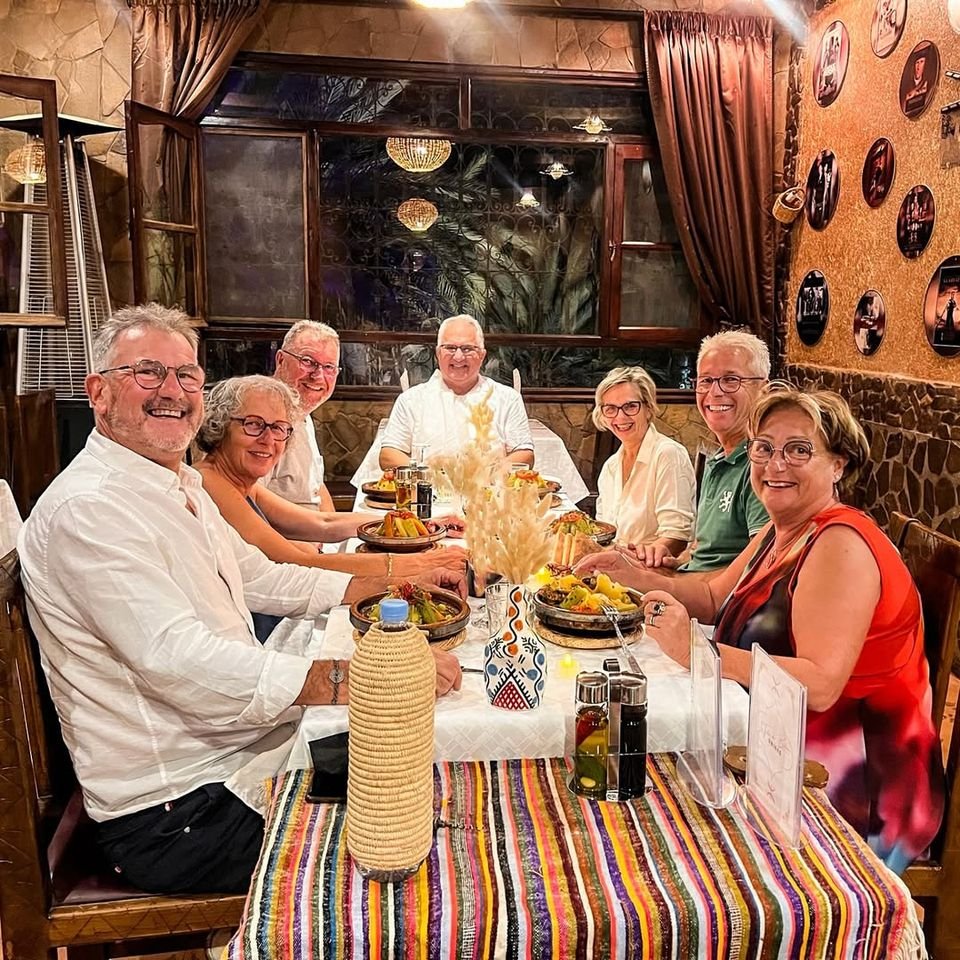
Couscous is the natural dish for a table of six, ten or twenty. If you are travelling as a group, it is also the easiest dish to order ahead. Our page on group dinners in Ouarzazate explains how to organise it, and families will find tips in eating out with children.
A few manners
Eat from the part of the dish in front of you. If you use your hands, roll a little couscous with the fingers of your right hand into a small ball before eating it; it takes practice, and nobody expects you to manage it the first time. A spoon is perfectly acceptable.
For everything else about the way people eat here, see our Ouarzazate food guide.