Being vegetarian in Ouarzazate is easier than many travellers fear, and harder than the menus suggest. Easier, because the cooking of the south is built on vegetables, pulses and grain. Harder, because a dish that looks meatless may have been cooked in a meat broth, and nobody thought to mention it.
This page is for the moment you are actually here, looking for dinner. For an inventory of Moroccan vegetarian dishes, from salads to desserts, see our earlier article on eating vegetarian in Morocco.
Words that help
Most restaurant staff in Ouarzazate speak French, and many speak some English. In smaller places, a few words of Darija go a long way:
- Bla lham: without meat.
- Khodra: vegetables. A vegetable tagine is a tajine b'khodra.
- Bla djaj: without chicken. Worth adding, because some people do not count chicken as meat.
In French, "sans viande, sans poulet, sans bouillon de viande" covers the important cases.
The broth question
This is where vegetarians are most often caught out. Couscous is traditionally steamed over a broth in which meat has cooked, and the vegetables are served in that same broth. Harira, the evening soup, is often made with a little meat or meat stock. Rfissa is a chicken dish by definition.
A vegetable couscous is therefore only truly vegetarian if the kitchen made it that way, with its own broth. Ask directly: is the broth made with meat? In a kitchen that cooks to order it is a simple request. In one that cooked a large pot at midday for the whole evening, it may be impossible, and an honest answer is worth more than a polite yes.
Vegans should also ask about butter (smen, a preserved butter, flavours some dishes), honey in the pastries, and eggs in some tagines.
Where it is easiest
At breakfast and during the day. A Moroccan breakfast is largely vegetarian already: bread, msemen, olive oil, honey, jam, cheese, eggs. Fresh orange juice is easy to find in town, and the fruit and vegetable sellers in the centre have dates, olives, nuts and fruit for the road.
In restaurants that cook to order. The difference between an easy evening and a difficult one is notice. A cook who knows at four o'clock that one guest does not eat meat will make a vegetable tagine or a separate broth without fuss. Told at the table, the options shrink.
In guesthouses. If you are sleeping in a riad that serves dinner, say so when you check in, not when the dishes arrive.
At our table
We write this journal, so here is our own offer, plainly. At La Table du Berbère every course of the menu has a vegetarian option:
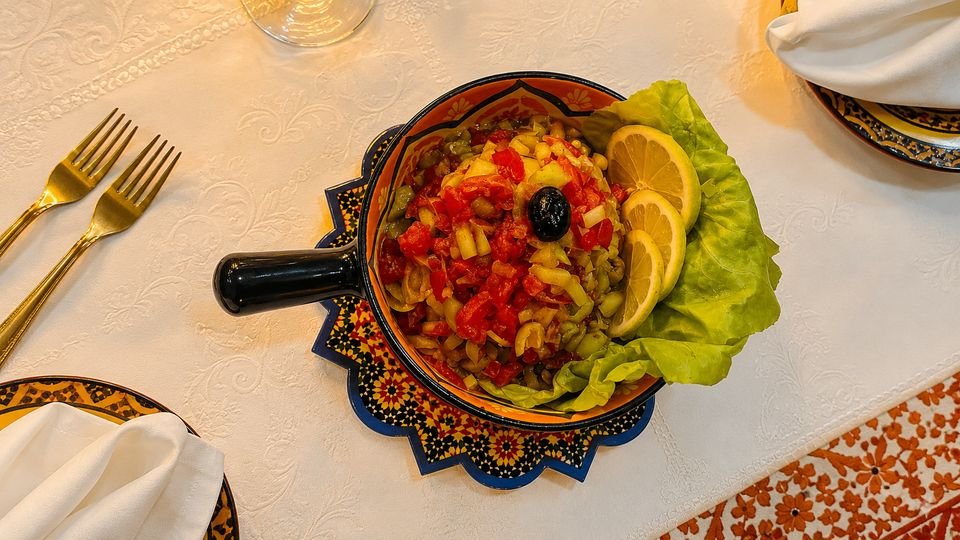
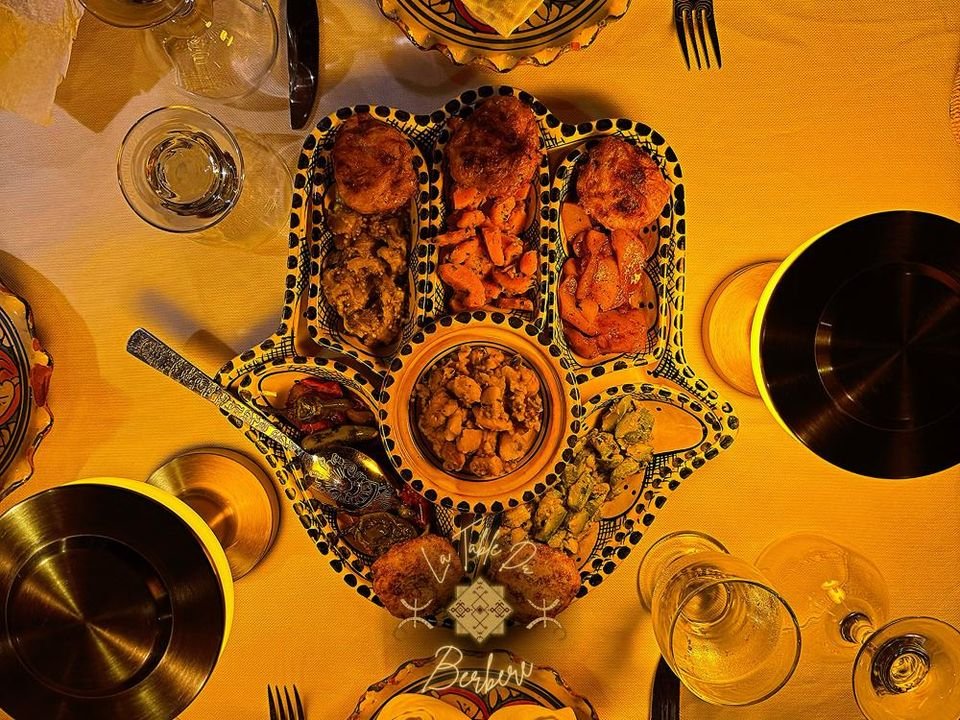
- Starters: the Moroccan salad, the mosaic of cooked and raw Moroccan salads, the vegetable soup, vegetarian nems.
- Mains: the vegetarian Berber tagine, and the seven vegetable couscous in its vegetarian version.
- Desserts: orange with cinnamon, basbousa, crêpes with chocolate, Moroccan pastries.
The vegetables come from the garden behind the house, which is half the reason we enjoy cooking them. Tell us that you are vegetarian or vegan, or about any allergy, when you book, and the chef will adapt the menu. We cook meat and wheat in the same kitchen, so we cannot promise a kitchen free of either, but we can tell you exactly what goes into your dish.
Questions we are asked
Is the vegetarian couscous made with a vegetable broth? Say you are vegetarian, or vegan, when you book and ask the question then: the chef will tell you how it is prepared for you that evening.
Is Moroccan food spicy? Rarely. It is scented with cumin, ginger, saffron, cinnamon and fresh herbs. Heat, when there is any, usually comes from harissa served on the side.
And gluten free? Couscous, bread, pastilla and most pastries contain wheat. Tagines and salads are easier. Tell us when you book and we will tell you what can be adapted.
For the wider picture of how meals work here, from bread to tea, see our Ouarzazate food guide. For starters specifically, read Moroccan salads to try.